The next stop of the day was one I had been most excited about long before the trip even began: the Jökulsárlón glacier lagoon. In photos, the icebergs looked magical, almost unreal, but seeing them in person was on a completely different level. As I stood there watching these vast chunks of ice slowly drift towards the ocean, I was genuinely blown away – wow! That is the moment when Iceland truly captivates you completely.
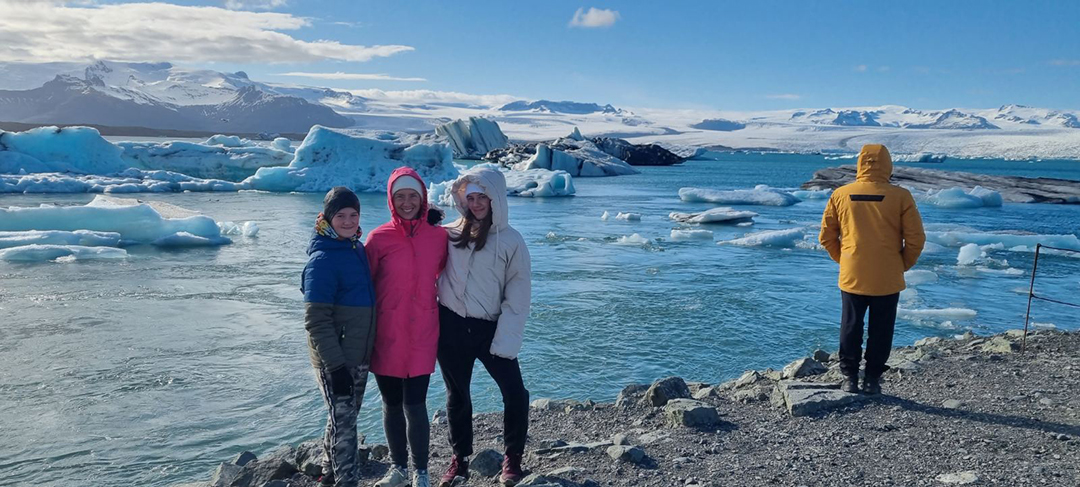
We parked in the designated car park and paid 1000 ISK, then set off on foot towards the lagoon and Diamond Beach.
The Jökulsárlón glacier lagoon was formed by the melting of the Breiðamerkurjökull glacier, which is part of the vast Vatnajökull National Park. The lagoon is filled with icebergs that break away from the glacier and drift with the current towards the Atlantic Ocean. Among the drifting ice, we even spotted seals, for whom the lagoon provides a safe haven all year round.
Just across the road is Diamond Beach, where the icebergs that do not drift straight out to sea come to rest on the black sand. These icy sculptures sparkle in the sunlight like real diamonds, which is how the beach got its name. During our visit, the wind was blowing the opposite way, which meant that most of the ice stayed in the lagoon. On the beach, we could only see a few smaller pieces of ice that had been there for a while, slowly melting away. Even that felt special, like a frozen moment captured in time.
From here on, longer distances awaited us. We left the south coast behind and made our way north across the island. That evening, we stayed on a cliff with stunning views over the sea. Peace, quiet, and an endless view of the sea made the perfect end to the day.
On our way north, we first took time to visit Stuðlagil Canyon, which is considered one of the most beautiful examples of basalt columns in Iceland.
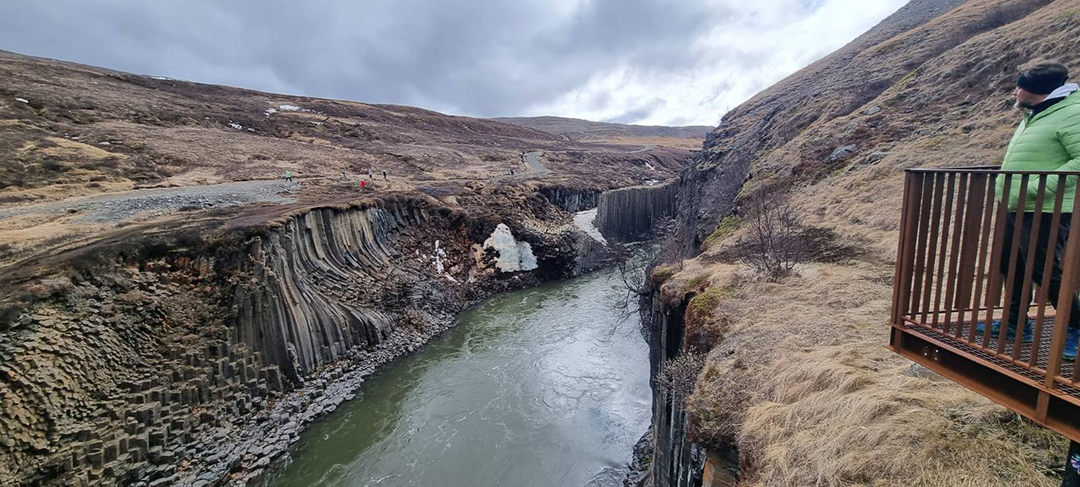
There are two routes that go to the canyon:
Parking at both spots costs 1000 ISK. Since parking at all the car parks is charged per day, we usually used that time to prepare lunch.
Fun fact: the canyon was once completely submerged, as it was covered by the Jökla River. It was only after locals built a dam to connect the divided Jökuldalur Valley that the water level dropped, revealing this stunning natural wonder.
I read somewhere that the Jökla River was once so turbulent that it divided the Jökuldalur Valley into two parts. Farmers and villagers on both sides were completely cut off from each other. To solve this problem, the locals built a dam across the river, which caused the water level to drop.
After our stop at the canyon, we drove on to one of Iceland's most powerful natural wonders: Dettifoss, known as the strongest waterfall in Europe.
The Dettifoss Waterfall completely took our breath away. It is 100 metres wide and 44 metres tall, with a massive volume of water crashing with full force into the deep gorge below. That is nature in its purest and most raw form.
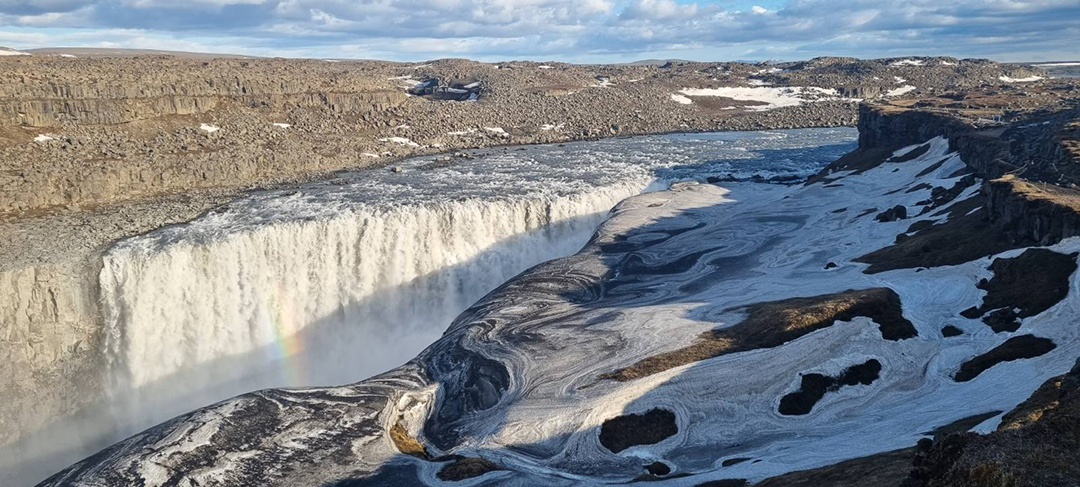
Nearby is the smaller Goðafoss waterfall, which many people overlook, but it is just as beautiful and worth a visit. There is a marked walking path to both waterfalls, and parking is free.
When we got to Dettifoss, it was already eight in the evening, but with the long days, everything was still bathed in light. That is a real advantage of travelling at this time of year, with more hours for experiences and less of a rush to get anywhere.
After the awe-inspiring visit to Dettifoss, we continued north to the town of Húsavík, known as Iceland's whale-watching capital. The drive from the waterfalls to Húsavík left us speechless, as the landscape shifted from rugged rocky terrain to softer, grassy stretches. It was as if Iceland was slowly trading its dramatic backdrop for something calmer and gentler.
For the night, we chose a beautiful spot by the coast, just a few minutes’ drive from the centre of Húsavík. There, we had the perfect view of the sea and the black sand beach, and it was immediately clear that this would be a special evening and an even more remarkable start to the next day.
We woke to a light, gentle rain, the kind that does not disturb you and in fact makes everything feel even more magical. Before breakfast, I went for a short walk on my own and all I can say is that it felt like something out of a fairytale.
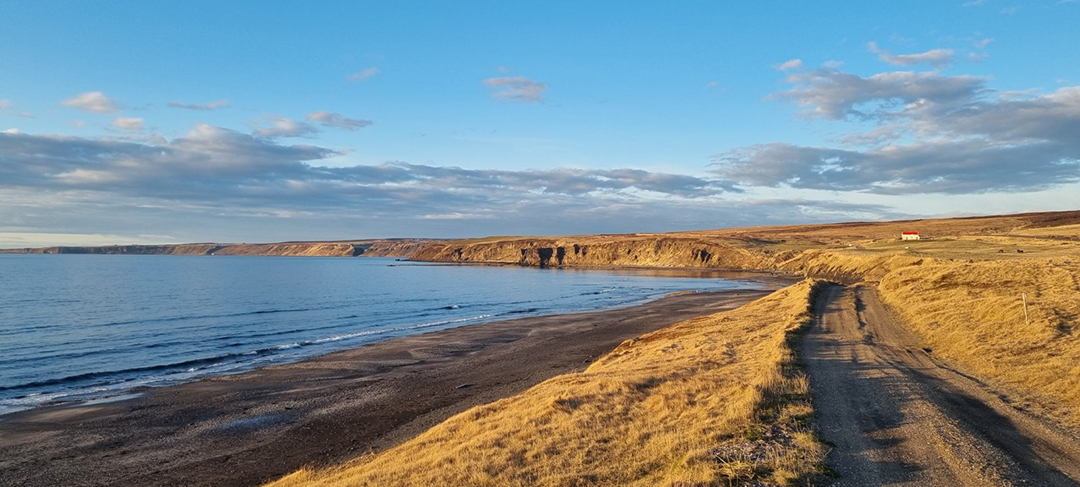
On one side, the black sand beach, the gentle lapping of the sea, and a mist rising from the surface. On the other side, Icelandic horses grazing along the side of the road. The sound of the rain, the quiet of nature, and the feeling that time had stood still. At that moment, everything was perfect.
Such a morning was the ideal start to one of the most memorable experiences of our trip, which was whale watching. It was this experience that brought us to Húsavík, and it did not disappoint.
One of our most memorable experiences in Iceland was whale watching in Húsavík aboard the Moby Dick, the first boat ever to set sail from the harbour specifically for whale watching. What we particularly liked about this company is that they take smaller groups than other operators, creating a more intimate atmosphere. On top of that, they are extremely respectful towards the whales and the environment, which is very important to us.
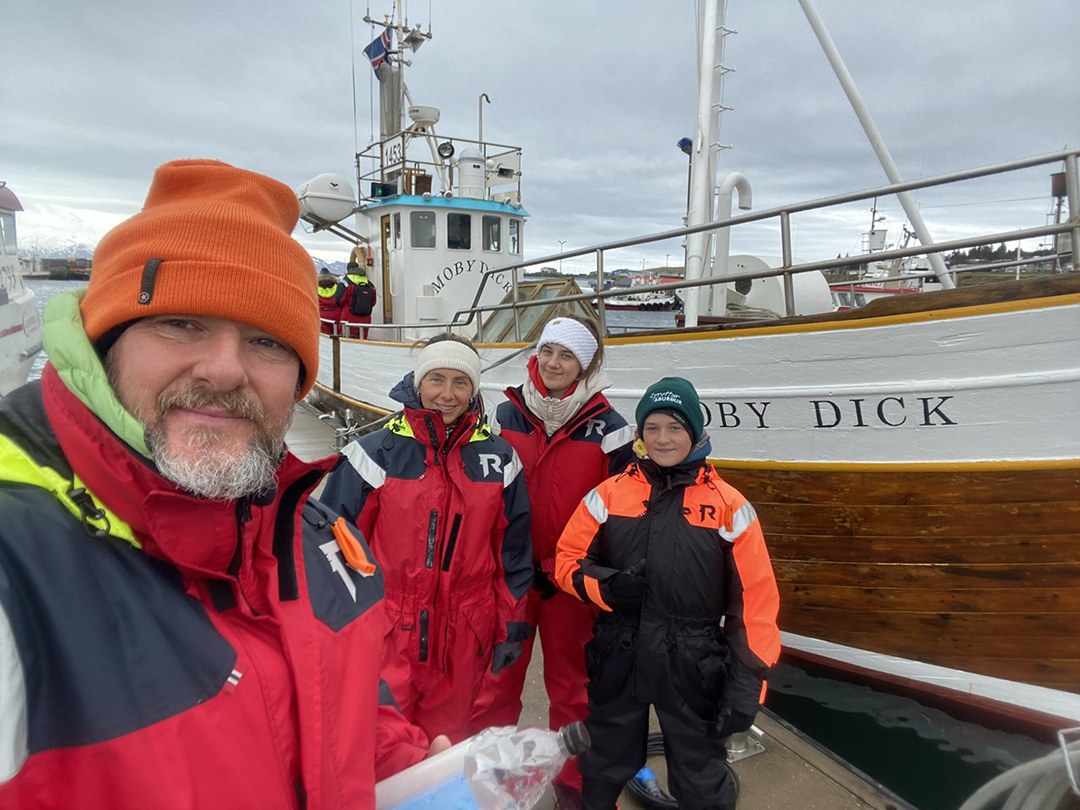
Our guide was a biologist from Portugal, incredibly friendly and full of knowledge. She was happy to share interesting facts about whales and their behavior. The captain was clearly experienced and knew exactly what he was doing.
The weather was not the best that day, an the vawes were quite big. We made sure to get seats at the back of the boat in time, where it was calmer, less bumpy, and we could enjoy watching these amazing animals without stress.
Húsavík is considered one of the best places for whale watching in Iceland. In this area, the whales feed before heading to warmer waters, so the chances of seeing them are very high.
The Moby Dick team was truly amazing, and I am happy to share that I managed to arrange a 10% discount for all my readers. When booking through their website, use the code PETRATRAVELS and the discount will be applied at checkout.

Copyright (©) 2010 - 2026 Youth Hostel | Our Privacy Policy | Cookies | | RPC